
B2B lead generation for medical devices
Reaching procurement and department heads for a medical device distributor
A distributor with new lines in patient monitoring and infection control relied on tenders and relationships with a dozen hospitals. Expansion to private hospital groups and day-surgery centres needed conversations with biomedical engineers, department heads and procurement before tenders were written. We built an outbound engine around new facility openings, accreditation cycles and equipment age.
- Client
- Medical device and consumables distributor
- Region
- United Arab Emirates and Saudi Arabia
- Scale
- 90 to 130 employees
- Timeline
- Live in 3 weeks, measured over 8 months
Representative engagement. Client details are anonymised and figures reflect typical outcomes from comparable deployments.
What the client got
0
Clinical evaluations booked
In eight months at facilities the distributor had never sold to.
0
Tenders won where the spec was influenced early
Including two private hospital group frameworks.
0%
Of opportunities now in the CRM
Forecasts are built from conversations, not just tender calendars.
The bottlenecks
Bottleneck 1
Tenders were written for incumbents
By the time a tender appeared, specifications matched the existing supplier. Winning meant influencing the specification months earlier.
Bottleneck 2
Decision-makers were hard to reach
Biomedical engineering, nursing leadership and procurement each had a say. Sales reps visited the hospitals they knew and could not cover new groups.
Bottleneck 3
No pipeline visibility
Opportunities lived in reps’ phones. Management forecast from tender calendars, not conversations.
What we built
Step 1
Facility signal targeting
Hospitals and surgery centres were prioritised by signals: new facilities and wings under construction, upcoming accreditation renewals, published equipment replacement cycles and hiring for relevant departments.
Step 2
Role-specific sequences
Biomedical engineers heard about service response times and integration with existing monitoring. Nursing leaders heard about workflow and training. Procurement heard about consolidated supply and compliance documentation. Each sequence offered a clinical evaluation, not a brochure.
Step 3
Evaluation booking and rep hand-off
Replies were qualified on facility type, bed count and timing, then booked as on-site evaluations with the territory rep, who received a brief covering the facility’s signals and the contacts engaged.
Step 4
CRM pipeline and tender tracking
Every conversation was logged with stage and expected tender date, giving management a pipeline connected to the tender calendar for the first time.
The automation workflow
Pre-tender outbound
From facility signal to clinical evaluation
Questions clients ask about this engagement
Is outreach to healthcare staff compliant?
Outreach is to professional roles at institutions on business matters, with clear identification and opt-out, and follows the client’s own compliance review. No patient data is involved.
How are evaluations handled?
The territory rep and a clinical application specialist run them. The outbound engine books and briefs; it does not replace the clinical conversation.
More in Healthcare
Industry overview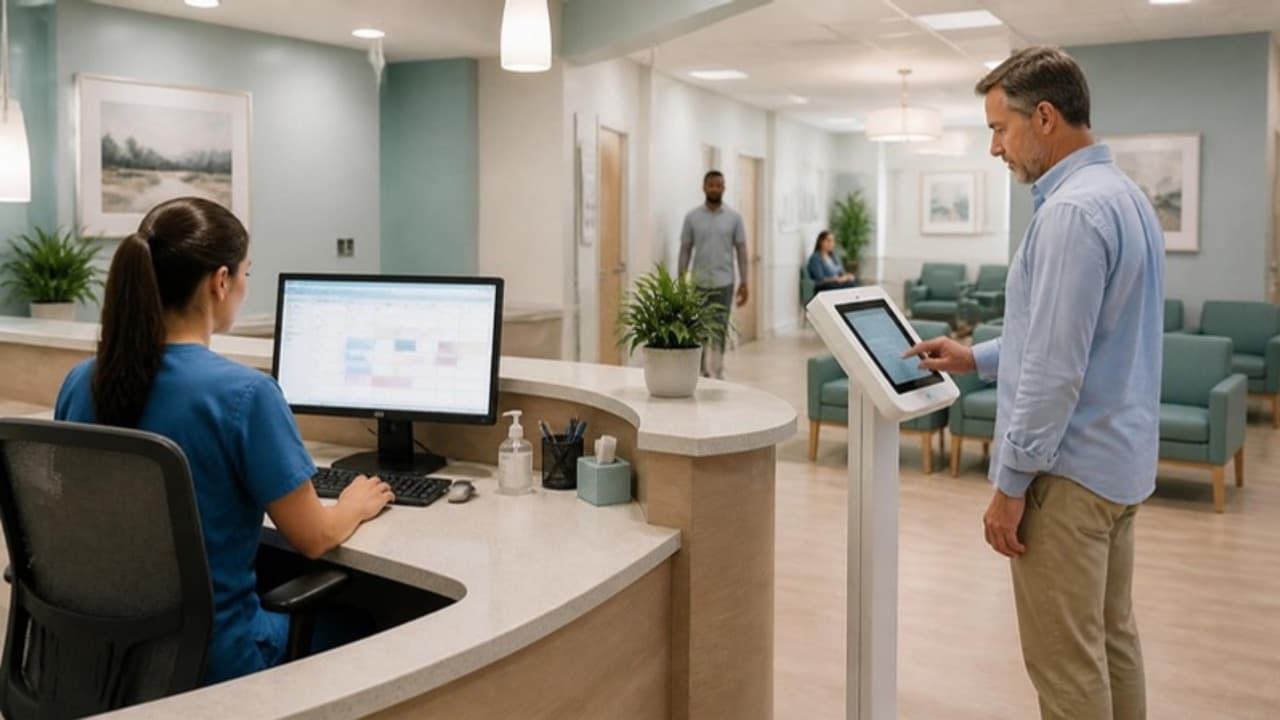
Healthcare workflow automation
Patient intake and reminders that cut no-shows for a multi-clinic group
Front desk staff re-keyed paper intake forms, chased confirmations by phone, and still faced a double-digit no-show rate. We automated digital intake, insurance checks and multi-channel reminders with privacy controls built in, so clinicians see more patients and staff do less data entry.
38%
Reduction in no-shows

B2B lead generation
Reaching hospital CIOs for a healthcare IT vendor
Selling into hospitals means long cycles and cautious buyers who ignore generic outreach. We built an account-based outbound programme for a healthcare IT vendor that reached CIOs and department heads with specific, relevant messages and produced a steady flow of discovery meetings.
12
Discovery meetings per month
Patient recall and scheduling automation
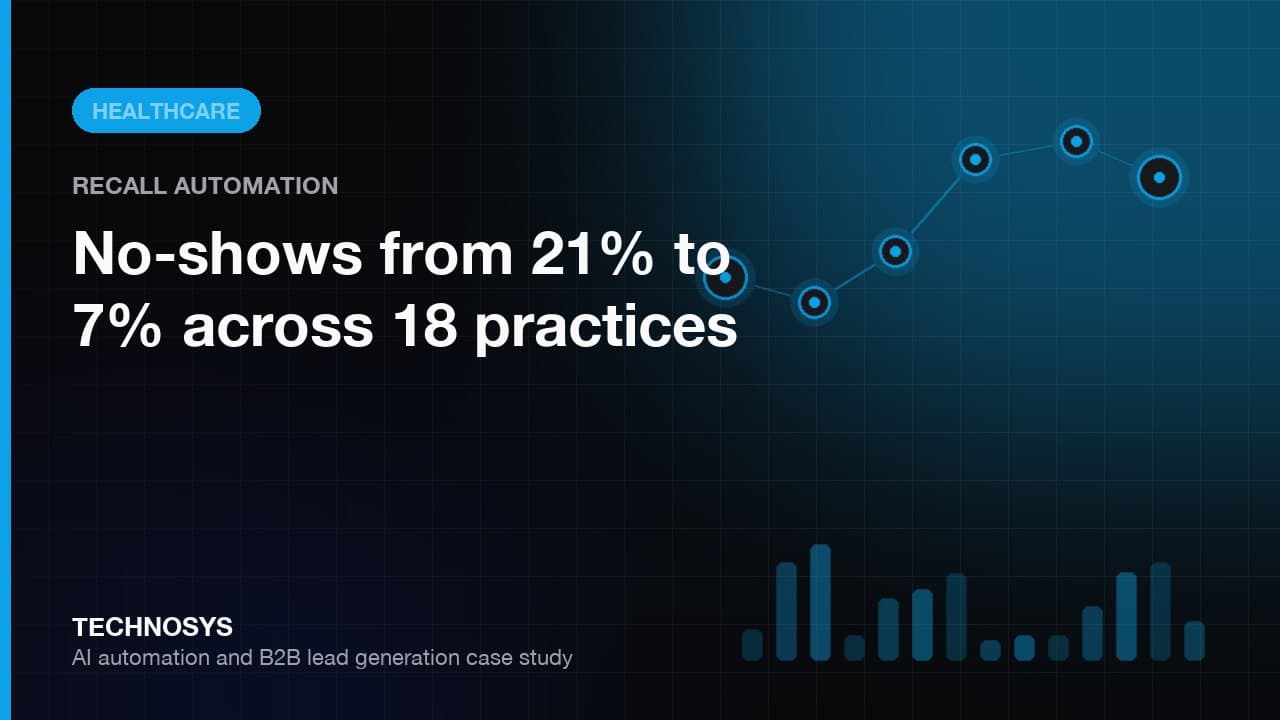
Hygiene recalls and no-shows handled by workflow across 18 dental practices
A dental group’s hygiene schedule was the engine of its revenue, and a fifth of slots went empty. Recall lists were printed, front desks called when they had time, and no-shows were discovered when the chair sat idle. We built a recall and confirmation workflow that fills the schedule from the practice management system and works the waitlist automatically.
21%→7%
Hygiene no-show rate
Patient communication automation
Lab reports delivered, explained and queried without a call centre
A diagnostic chain processed 20,000 reports a day and ran a 60-seat call centre to tell patients their report was ready and answer “is this value normal”. We built a WhatsApp workflow that delivers reports securely, explains results in plain language within safe boundaries, routes clinical questions to pathologists, and books follow-up tests.
68%
Reduction in inbound call volume
Have a similar bottleneck?
Tell us how the work happens today. We will show you the workflow we would build and prototype it on your own process.